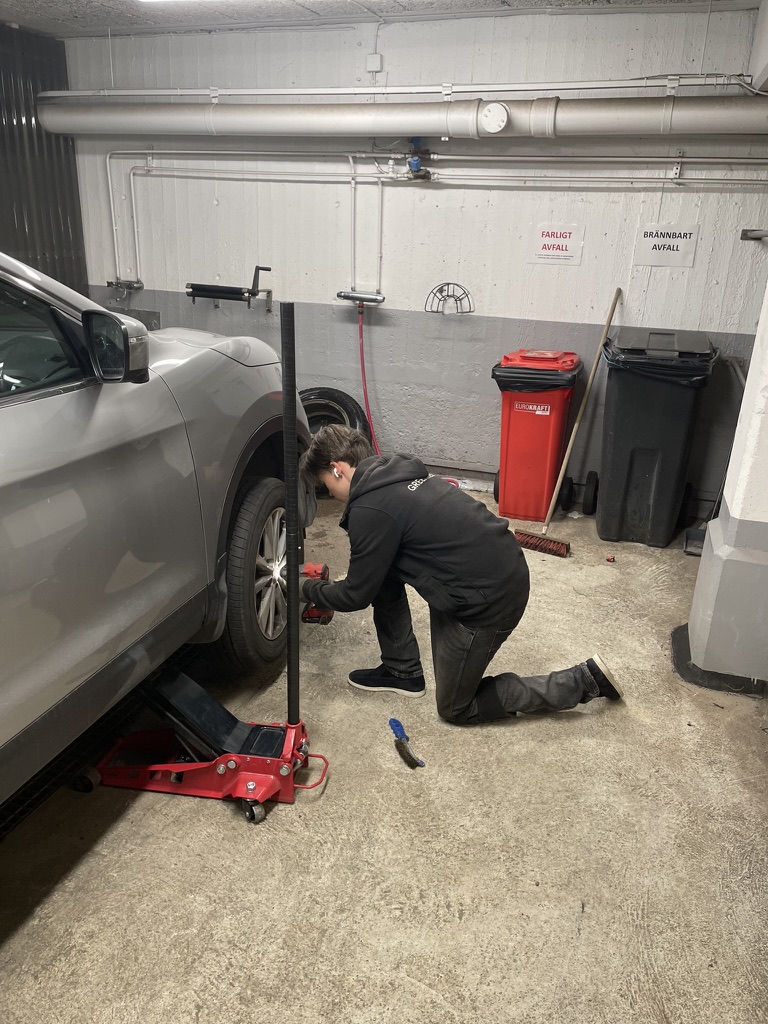
Wheel change.
On your driveway, in your garage, or wherever the car is parked. Work to the car maker's specification. The same checks a tyre workshop performs, the same calibration, the same care.
100–180 Nm
Torque to manufacturer spec
01
The work.
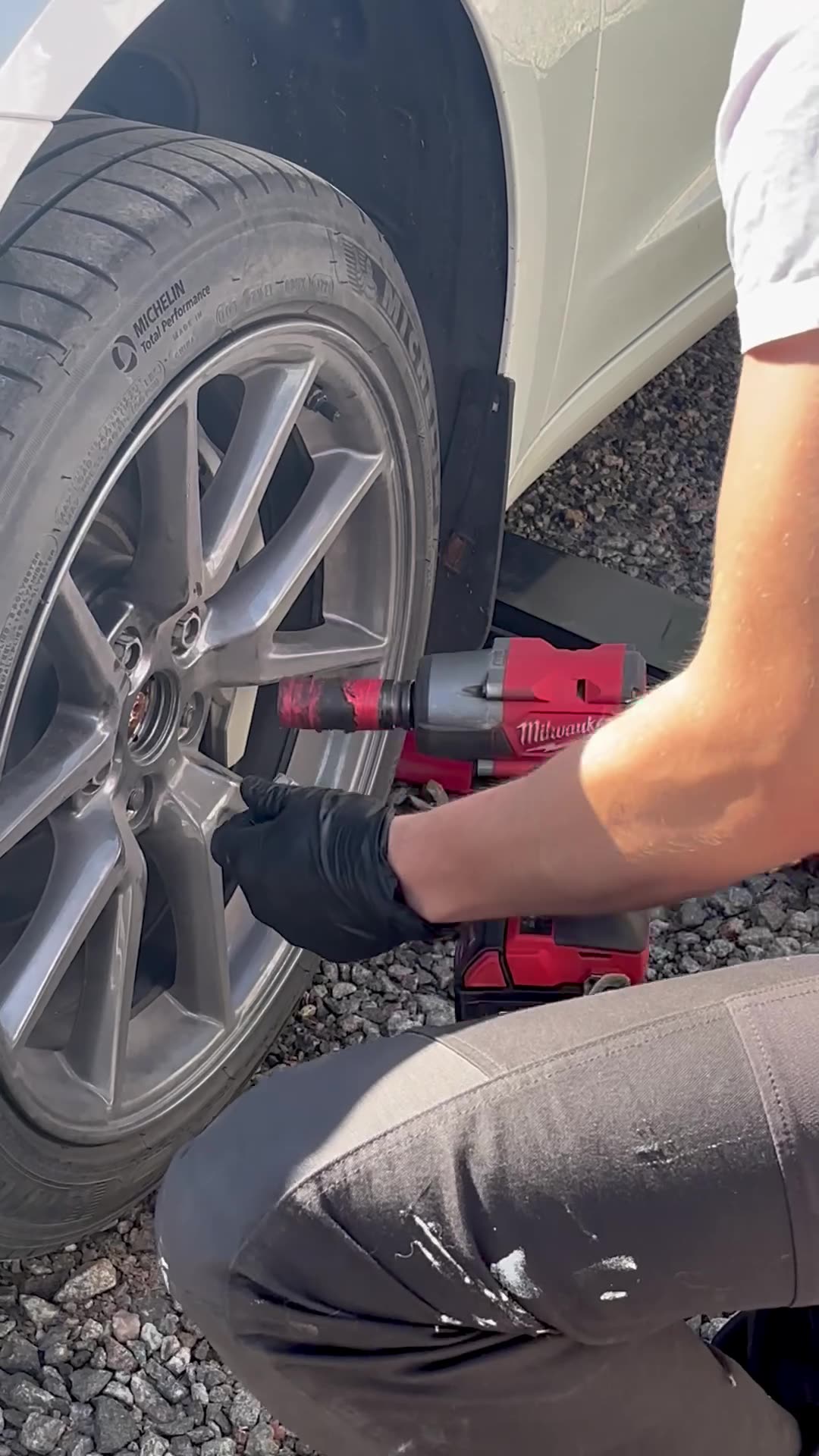
The wheels are loosened in a diagonal pattern. The car is raised at the lift point specified in the service manual and secured on stands before the wheel comes off. The mating surface between rim and hub is cleaned of rust and deposits. That is where vibration starts if you cut corners.
The new wheels go on with the bolts tightened in stages, again in a diagonal pattern. The final torque is set with a calibrated torque wrench to the value the manufacturer specifies. Never by feel.
Tyre pressure is set to the manufacturer's recommendation. That figure is on a label in the driver's door or the fuel flap, not on the tyre sidewall. Reading the wrong one is common and leads to worse wear and fuel economy.
02
The check.
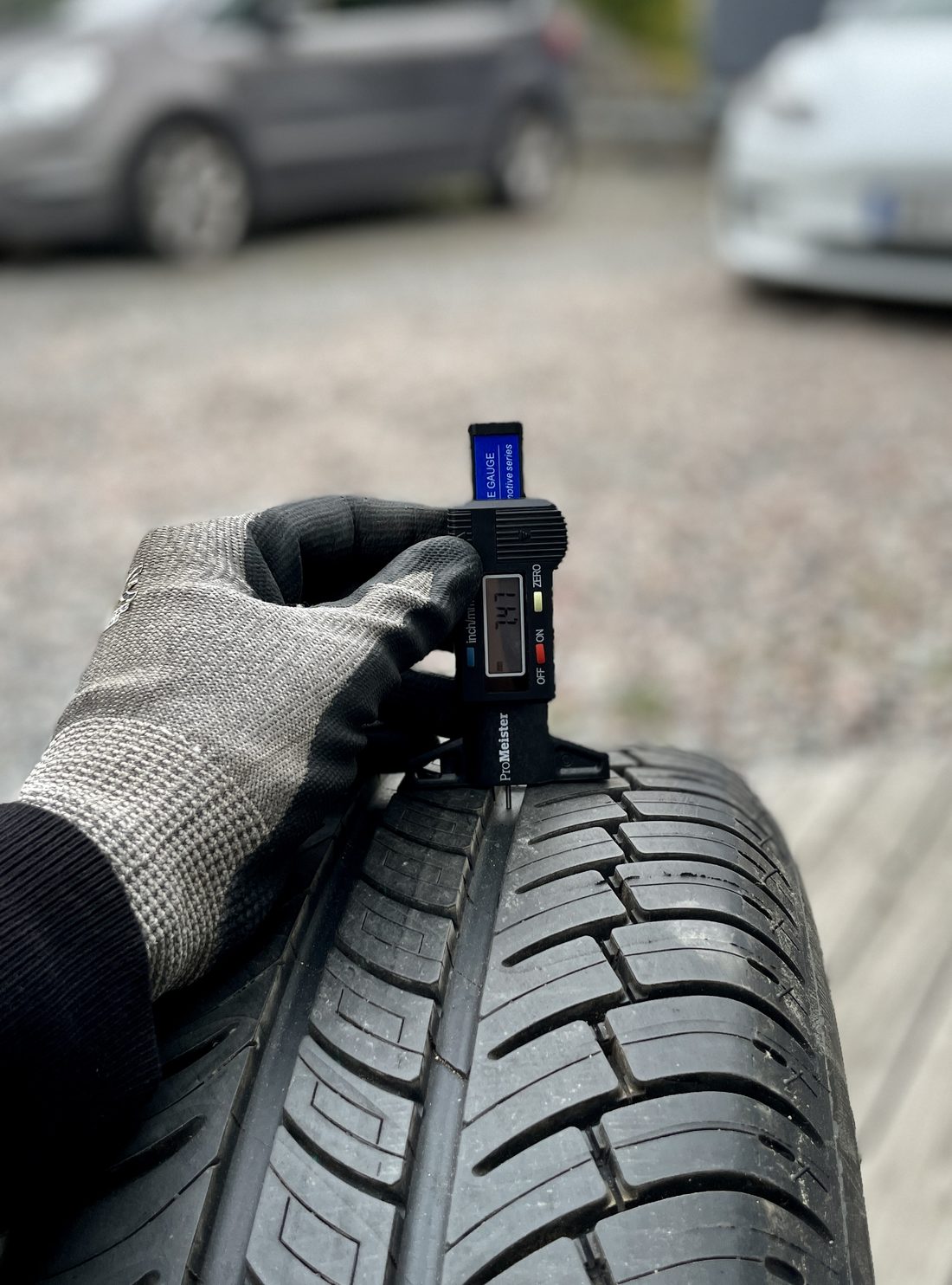
Tread depth is measured on all four wheels with a separate gauge. The condition of the tyres is noted: uneven wear, cracking, sidewall damage. If anything looks serious, I tell you.
Bolts are torque-checked once after fitting. With the Complete package you get an email after the visit with notes on the tyres' condition, tread depth and when the next change is likely due.
03
The tools.
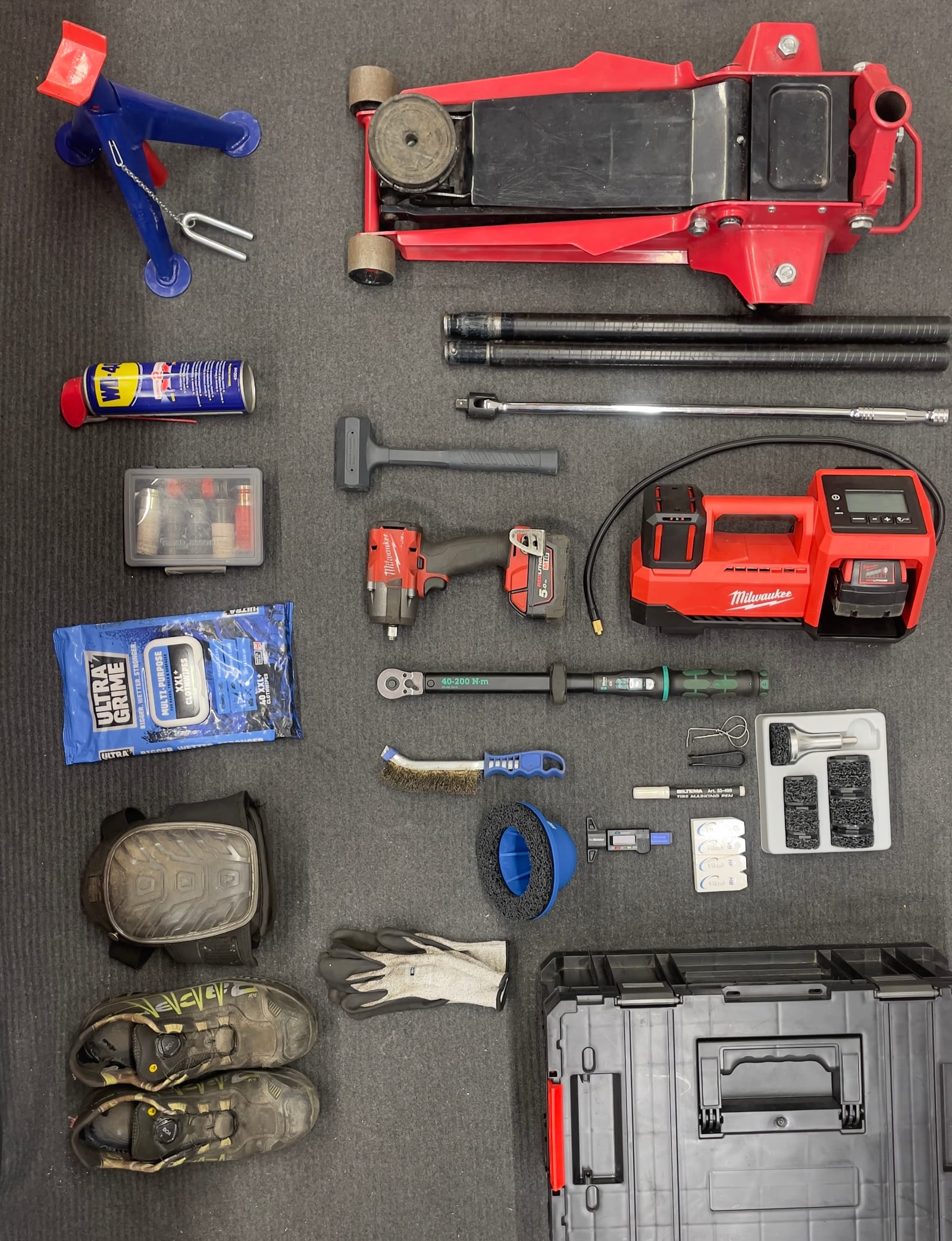
Workshop equipment, brought to your address.
- Hydraulic jack for cars and SUVs
- Stands to secure the car during the change
- Torque wrench, 40 to 200 Nm, 1 Nm resolution
- Wire brush and copper paste when needed
- Tread depth gauge
- Compressor for tyre pressure
Workshop or home.
The difference isn't in how the work is done. The same torque wrench, the same checks, the same specifications. The difference is the logistics. At a workshop you drop the car off, wait, pick it up. At home the change takes 20 to 30 minutes and the car stays where it belongs the whole time.